Over the past few days, I have been spending my April vacation in the garden, soaking in a stretch of unseasonably warm, summer-like days here in Connecticut. After a winter of relentless snowstorms, I was more than ready to be outside with my hands in the soil.
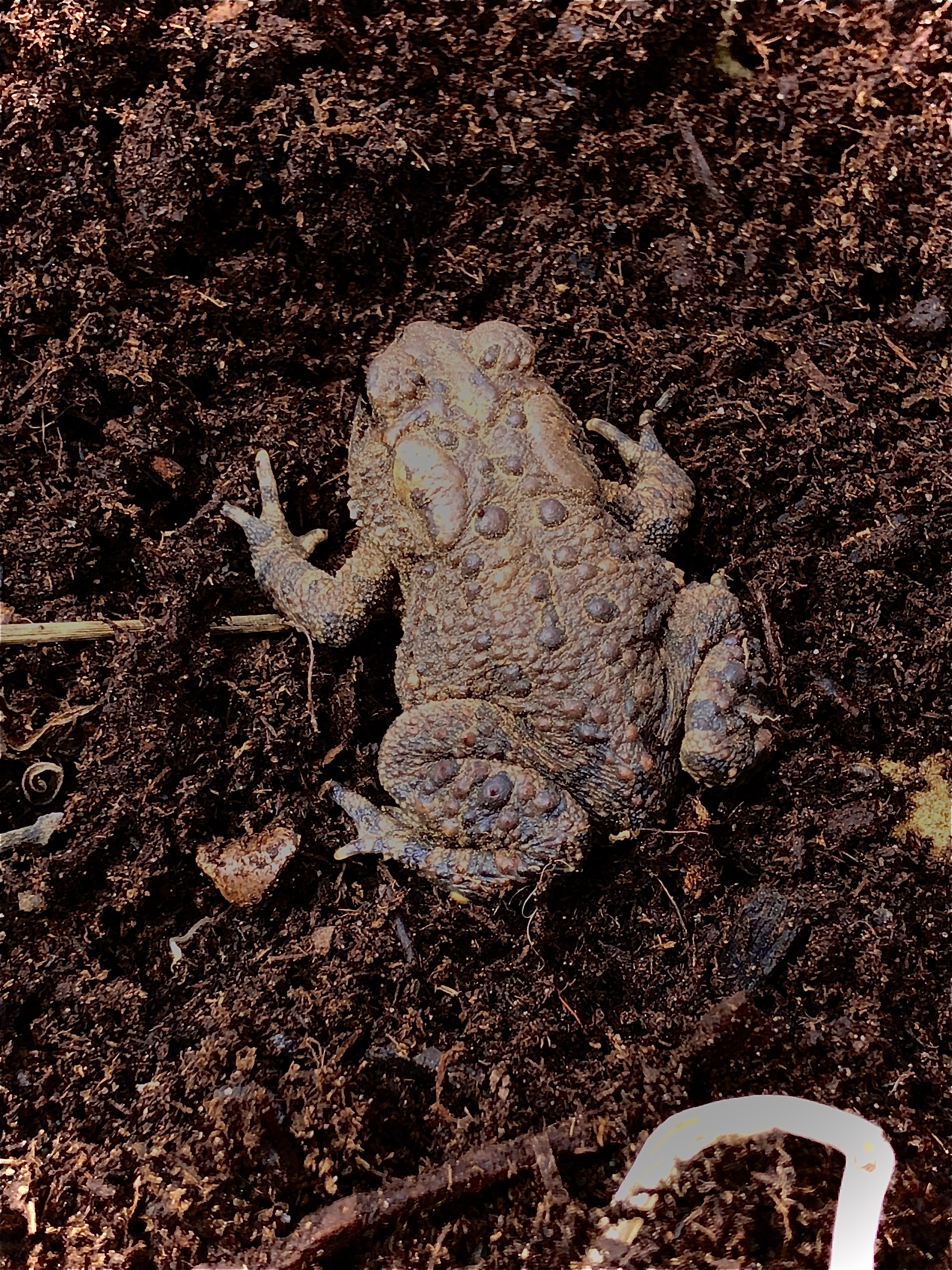
While topping off one of my raised beds, a wee toad suddenly pushed its way up through the earth right where I was working. The sight of it lit up something childlike in me — that pure, delighted gasp you feel when the world surprises you. I marveled at its tiny feet, imagined the impossibly small bones inside them, and let it rest in the warmth of my palm as it blinked its shiny eyes.
After a moment, I set it back where it had emerged and went on planting my seeds — French Breakfast radishes, chervil, Crackerjack African marigolds, Thalia dill. When I returned to water them in, the little toad had already slipped away.
That tiny encounter opened a door into thinking about what toads represent — not just biologically, but symbolically.
Toads: Amphibian Inhabitants of Liminality
In April, the world outside comes alive – the magnolia buds burst open seemingly overnight, the longer days bringing more daylight to evening farm chores, the way the spring light sparkles on surfaces in the morning, making colors seem brighter and shinier. Out in the garden, the air seems electric, and stirs something inside me, something primal and ancient that says, “Look – over here!” This early spring junction between winter and the growing season is a liminal space – a magical boundary between places, times, or ideas that many believe contains a unique energetic tension. Seasonal shifts are common liminal times in the garden, as are dawn and dusk, the boundary at the earth’s surface, and the electrified times right before and after a summer thunderstorm.
The American Toad in my garden was a messenger of that energetic space between the seasons. Here in Connecticut, toads do not truly hibernate, but undergo a process called brumation, where they remain in a sleep-like state in protected places – in underground burrows, under logs, under plant pots, and in piles of mulch – their vitals slowing down and their bodies cooling as they await warmer weather. The week’s heat and my activity woke it from its winter rest, bringing it to the surface to greet the sun. Toads are great allies in the garden, where they eat as many as 20,000 insects during a single gardening season. Brumation allows them to rest without eating until their natural prey returns in the spring.
Across cultures, toads consistently appear as creatures of thresholds — whether between worlds, seasons, or states of being. These small creatures are heralded as liminal beings, inhabiting a unique juncture between the underworld (below the soil surface) and the above-ground world. Many folktales in Egypt and Celtic lands depict them as messengers of transformation, rebirth, and good fortune, and their close connection to the earth evokes associations with fertility, natural abundance, and hidden wisdom, now revealed. Other connections include wealth (China) and cleansing (North American indigenous peoples). As spring messengers, toads ask us to remember the abundance that lies within apparent “dead” spaces: the soil, a dry seed, an overwintering root. Their appearance as wild guides brings us hope after the cold, bleak winter and reminds us to look beyond barren appearances to see potential life.

The Hope of Life After the “Death” of Winter
When Hades took Persephone to the underworld, her mother, Demeter — goddess of the harvest — grieved so deeply that she withdrew her gifts from the earth. The world grew cold, leaves fell, and life went dormant until Persephone’s return each spring.
Like Persephone, the wee toad in my garden had slipped beneath the soil when the cold set in, waiting out the dark months in its hidden chamber. The first warm days coaxed it back to the surface — along with the dandelions, the robins, and the spring lambs in the barn.
And boy, did we really feel Demeter’s retreat in Connecticut last winter! Throughout New England – and most of the Continental United States- our winter was a brutal one, replete with several massive snowstorms, high winds, and weeks (it seemed) of sub-zero temperatures. Along with all that, many members of my family succumbed to the flu, RSV, and other respiratory illnesses after being shut inside for months in a row. We really felt Demeter withdrawing her magic from the Earth! The little toad, that harbinger of hope from the world underground, emerged to remind me that spring always returns, no matter how harsh the winter seems. At some point, it just has to come back. And it did.
Just like the garden, our lives have liminal, transitional spaces: preparation for children going away to college… the years when you’ve decided to retire soon, but not this year… first holidays without a loved one’s presence…the weeks leading up to the birth of a first child. You are standing on the shore of the old way, but haven’t yet set out into the new. The garden toad encourages us to look for the guides during seasons of uncertainty and to hold on to the hope of brighter, gentler days to come.
The wee toad didn’t appear to teach me a lesson — it simply emerged when the conditions were right. And maybe that’s the reminder: our own emergence happens the same way. As you enjoy the returning warmth, sunshine, and life of April, remember that all of life transpires in cycles. When you are in a rough spot, encourage yourself that you are in a cycle – and better times will return, just as Persephone returned to the Earth’s surface each spring. Better times must return. They always do. You have been through worse – and the operative word is THROUGH. As the old saying goes, “Where there is life, there is hope.” Let the little toad remind you to look for the reminders of that hope, at the times when things around you look the most dismal. Be a witness to the cycle of life, and begin by looking for it in the tiny changes happening around you right now.
Today’s Action Plan:
Pull some of the toad-messenger’s magic into your day today:
- When you wake up, name one thing or idea that is waking up in you today.
- On your way to your car in the morning, note one living thing that you noticed today that wasn’t there yesterday.
- Step outside for 30 seconds during your lunch break and notice one sign of spring.
- After work, revisit a household task that has been “buried” for a while
Use the following questions to guide your meditation or journaling time today:
- What is the Earth, and my intuition, trying to show me right now?
- What part of my wild nature is waiting to emerge? How can I trust it more?

For More Information
Dahle, L. (2021). 3 Types of toads found in Connecticut. Bird Watching HQ . https://birdwatchinghq.com/toads-in-connecticut/
Jenkins, C. (2024). Understanding the hibernation habits of American toads. PetShun. https://petshun.com/article/do-american-toads-hibernate
Luke (2023). The spiritual significance of toads: A deeper understanding. Spirituality Shepherd. https://spiritualityshepherd.com/spiritual-meaning-of-a-toad/
Rose, S. (2025). The spiritual meaning of the toad: A guide to its mystical symbolism. Wisdom of the Spirit. https://wisdomofthespirit.com/the-spiritual-meaning-of-toad/
Leave a Reply